
1. What is the Cao Bang Tour?
A Cao Bang Tour takes travelers to the northeastern border of Vietnam, a region defined by majestic waterfalls, hidden cave systems, and a rich revolutionary history. While Ha Giang is famous for its rocky peaks, Cao Bang is a lush, emerald paradise known as the “Land of Miracles.”
As a key part of the Non Nuoc Cao Bang UNESCO Global Geopark, this destination is famous for:
The Ban Gioc Waterfall: One of the most beautiful waterfalls in the world.
Limestone Karsts & Rivers: Calm, winding rivers like the Quay Son, surrounded by green mountains.
Historical Significance: The cradle of the Vietnamese revolution and home to the Pac Bo Cave.
2. Options for your trip to Cao Bang

3. Cao Bang’s Beauty: A Seasonal Guide
Cao Bang is stunning year-round, but each season offers a different “masterpiece” for your eyes:
Spring (February – April): The Season of New Life The weather is mild and pleasant. Flowers like apricot and pear blossoms dot the landscape. It’s an ideal time for trekking and visiting the historical sites without the summer heat.
Summer (May – August): The Roar of the Falls This is the best time to see Ban Gioc Waterfall in its full glory. The heavy summer rains feed the falls, making them powerful and thunderous. The surrounding rice paddies are a deep, vibrant green.
Autumn (September – October): The Golden Harvest Similar to Ha Giang, Cao Bang’s valleys turn golden as the rice matures. The air is cool and the water in the rivers turns a clear, turquoise blue. This is widely considered the best time to visit.
Winter (November – January): The Red Leaf Season In the Tra Linh district, the forest leaves turn red and yellow, creating a scene reminiscent of temperate Europe. It’s also the season for Chestnut harvesting in Trung Khanh.
4. Top Must-Visit Check-in Spots in Cao Bang
Cao Bang is a land of breathtaking landscapes, where historical sites meet some of the most spectacular natural wonders in Southeast Asia. For travelers seeking an authentic and majestic experience in Northern Vietnam, these are the top spots to capture and explore.
1. Ban Gioc Waterfall – The Crown Jewel
Ranked as one of the four largest cross-border waterfalls in the world, Ban Gioc is the most iconic landmark in Cao Bang. The water cascades down multiple tiers through lush limestone mountains, creating a scene straight out of a painting.
-
Check-in highlight: Taking a raft to get close to the base of the waterfall to feel the mist and capture the grand scale of the falls.
-
Pro Tip: Visit between August and October for the most powerful and clear water flow.
2. Nguom Ngao Cave
Located just a few kilometers from Ban Gioc, this is often called the most beautiful cave in Northern Vietnam. It stretches over several kilometers with an incredible system of stalactites that look like blooming lotus flowers or giant stone pillars.
-
Check-in highlight: The “Silver Tree” and “Golden Lotus” stalactite formations.
-
Pro Tip: The cave has a “standard” route and a “trekking” route for those who want more adventure.
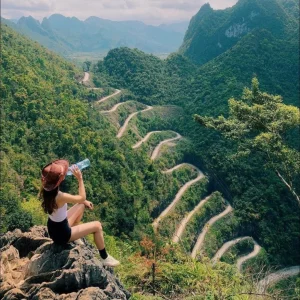
3. Me Pia Pass – The 14-Storey Slope
This is one of the most famous mountain passes in Vietnam, featuring 14 sharp, steep switchbacks. It is a true test for any driver and a dream for landscape photographers.
-
Check-in highlight: Hike up the viewing point to see the entire “S-curve” snake-like path winding down the mountain.
4. Angel’s Eye Mountain
Located in the heart of Thang Hen Lake valley, this unique mountain features a giant circular hole through its center, looking like a “divine eye.” The surrounding valley is a vast green meadow with peaceful lakes.
-
Check-in highlight: Camping or picnicking in the meadow with the “Eye” mountain in the background.
5. Khuoi Ky Stone Village
This ancient village of the Tay ethnic people is famous for its houses made entirely of stone. These “stone fortresses” have stood for hundreds of years and offer a glimpse into the unique local heritage.
-
Check-in highlight: The rustic stone alleys and the unique architecture of the homestays.
6. Pac Bo Historical Site
A place where history meets nature. You can visit Coc Bo Cave and the turquoise Lenin Stream. The water here is so clear that you can see the fish swimming at the bottom.
-
Check-in highlight: The iconic “Karl Marx Mountain” and the serene, emerald-blue waters of Lenin Stream