
What is the Bac Kan Tour (Ba Be Lake)?
A Bac Kan Tour is an escape into the heart of Northeast Vietnam’s wild, green soul. The province’s crown jewel is Ba Be National Park, which houses Ba Be Lake—one of the 20 largest natural freshwater lakes in the world.
Unlike the rugged limestone peaks of Ha Giang, Bac Kan offers a serene, “zen” experience. It is a land of:
Primeval Forests: Dense tropical jungles surrounding the massive lake.
Mystical Caves: Giant limestone caverns with ancient stalactites.
Ethnic Heritage: Home to the Tay people, who live in traditional stilt houses along the water’s edge.
Options for your trip to Bac Kan

The Beauty of Bac Kan: A Seasonal Guide
Bac Kan is beautiful year-round, but each season offers a different way to experience the lake:
Spring (February – April): The Festival Season The weather is mild, and the greenery is fresh. This is the best time for the Long Tong Festival (Down-to-the-field), where you can witness Tay culture, traditional games, and folk singing.
Summer (May – August): The Cooling Retreat While the rest of Vietnam swelters, the microclimate of Ba Be Lake remains cool. It’s the perfect time for kayaking, swimming, and exploring hidden waterfalls like Dau Dang.
Autumn (September – October): The Golden Calm The rains stop, and the water becomes crystal clear, reflecting the limestone mountains perfectly. The air is dry and cool—ideal for trekking through the national park.
Winter (November – January): The Misty Silence The lake is often draped in a thick, mysterious fog during the morning. It’s a quiet, peaceful time for those who want to disconnect from the world and enjoy local corn wine by a homestay fire.
Top Must-Visit Check-in Spots in Bac Kan
If you are planning a journey through the Northeast mountains, Bac Kan is a destination that captures the heart of every nature lover. Beyond its rugged limestone mountains, this province hides serene lakes, majestic waterfalls, and mystical caves.
Here are the top-rated check-in spots in Bac Kan for your travel itinerary:
1. Ba Be Lake – The “Green Pearl” of the Northeast
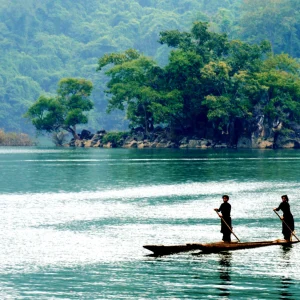
As one of the 20 largest natural freshwater lakes in the world, Ba Be Lake is the soul of Bac Kan tourism. The crystal-clear water reflecting the ancient limestone mountains creates a breathtaking, poetic landscape.
-
Best for: Boat trips, kayaking, and sunrise photography.
-
Check-in highlight: Sitting on a traditional dugout canoe amidst the vast emerald water.
2. Widow Islet
Located in the center of Pe Leng Lake (the second lake of Ba Be), this small, rocky islet is adorned with green trees year-round. Legend has it that this was the home of a kind-hearted widow who saved the villagers from a great flood.
-
Check-in highlight: A lone islet in the middle of the immense lake, perfect for minimalist and artistic shots.
3. An Ma Temple
Situated on An Ma Island inside Ba Be Lake, this ancient temple is a place of spiritual significance and tranquility. The surrounding lush greenery and lake views offer a peaceful atmosphere for visitors.
-
Best for: Cultural exploration and panoramic lake views.
4. Dau Dang Waterfall
Formed by the Nang River passing through the limestone mountains of Lung Nham, this waterfall cascades over 1,000 meters, creating a powerful and majestic scene.
-
Check-in highlight: The dramatic white foam of the water crashing against giant boulders.
5. Hua Ma Cave
Known as the most beautiful “dry cave” in the region, Hua Ma Cave features a spectacular system of stalactites and stalagmites in various unique shapes.
-
Check-in highlight: The massive entrance and the shimmering, golden-lit limestone formations inside.
6. Pac Ngoi Village
A traditional village of the Tay ethnic people located on the banks of the Leng River. Pac Ngoi still preserves its authentic stilt-house architecture and unique cultural identity.
-
Best for: Cultural immersion, tasting local specialties, and sunset views over the rice fields.
Travel Tips for Your Bac Kan Trip:
-
Best Time to Visit: From August to October (cool weather and clear water) or Spring (festival season).
-
What to Eat: Don’t forget to try grilled lake fish (Cá nướng), bamboo-tube rice (Cơm lam), and Bo Nam beef.
-
Getting There: Bac Kan is approximately 160km from Hanoi, making it an ideal stop on the loop to Cao Bang or Ha Giang.